Arabian Mandala: Bridging Eastern Elegance and Western Typography in Design
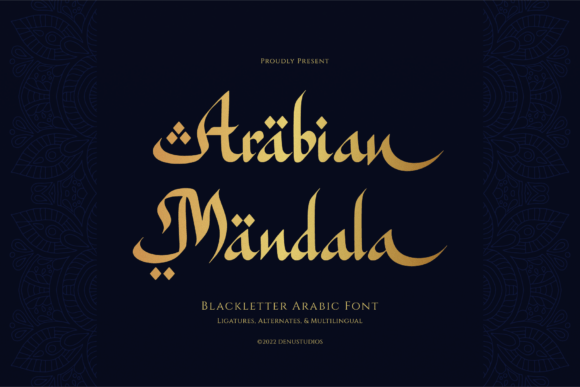
Typography is more than just the arrangement of letters; it's a visual language that conveys culture, emotion, and identity. In the world of design, the right font can transform a simple message into an evocative experience. Arabian Mandala, a faux-Arabic display typeface, offers a unique opportunity to blend the rich heritage of Middle Eastern calligraphy with the structured beauty of European blackletter styles. This fusion results in a font that exudes opulence, tradition, and artistic sophistication — making it a powerful tool for designers seeking to create visually compelling and culturally resonant content.
A Harmonious Fusion of Styles
The Arabian Mandala font stands out by seamlessly merging two distinct typographic traditions. On one hand, it draws from the dense, ornate structure of traditional European blackletter, often associated with medieval manuscripts and Gothic architecture. On the other, it embraces the fluidity and grace of Arabic script, known for its sweeping curves and intricate diacritic accents. The result is a typeface that feels both familiar and exotic, offering a bridge between cultures through typography.
This dual heritage allows the font to be versatile yet distinctive. It carries the weight and grandeur of blackletter while maintaining the elegance and dynamism of Arabic-inspired forms. The interplay between these styles creates a sense of movement and depth, ideal for capturing attention and conveying luxury.
Rich in Detail and Customization
One of the most notable features of Arabian Mandala is its extensive collection of ligatures and decorative alternates. These elements are not merely aesthetic flourishes but essential components that enhance legibility and add a layer of authenticity to the text. Ligatures, which combine characters into a single glyph, mimic the natural flow of Arabic handwriting, ensuring that the font reads as smoothly as it looks.
Decorative alternates provide additional flexibility, allowing designers to tailor the appearance of each letter or word to fit specific themes or branding needs. Whether crafting a headline for a Ramadan celebration or designing a label for a premium spice blend, these variations help ensure that the final product feels exclusive and high-end.
- Ligatures: Enhance the script’s fluidity and readability in longer texts.
- Alternates: Offer stylistic choices to match different creative visions.
- Geometric Precision: Maintains structural integrity and visual balance.
Applications Across Industries
Arabian Mandala is particularly well-suited for applications where cultural resonance and visual impact are paramount. Its design makes it a favorite among professionals working in luxury branding, hospitality, packaging, and publishing.
Luxury Branding and Marketing
In the realm of branding, especially within the Middle East, Arabian Mandala provides a strong visual anchor. For businesses targeting affluent audiences or those with ties to Arabic heritage, this font adds an air of sophistication and exclusivity. From logos to promotional materials, using Arabian Mandala can elevate a brand’s presence and communicate a deep appreciation for regional aesthetics.
Consider a high-end cosmetic line inspired by Bedouin traditions. A logo designed with Arabian Mandala would instantly evoke imagery of desert landscapes, ancient wisdom, and refined beauty. Similarly, a boutique hotel in Dubai might use this font in its signage and marketing brochures to reflect its commitment to authentic Arabian hospitality wrapped in modern luxury.
Event Graphics and Seasonal Campaigns
Seasonal events like Ramadan and Eid offer ample opportunities for creative expression, and the right typography can make all the difference. With its dramatic swoops and ornate details, Arabian Mandala is perfect for creating eye-catching banners, invitations, and social media graphics. The font’s ability to convey both reverence and festivity aligns perfectly with the spirit of these celebrations.
Designers often look for fonts that can adapt to different color palettes and graphic treatments. Arabian Mandala’s strong contrast and intricate shapes allow it to stand out against bold backgrounds or integrate subtly into minimalist designs. This versatility ensures it remains relevant across various visual strategies and platforms.
Food and Beverage Packaging
For the food and beverage industry, especially those focused on traditional products such as spices, teas, and gourmet dishes, typography plays a crucial role in storytelling. Arabian Mandala can be used to craft labels and packaging that speak to the history and craftsmanship behind each item.
Imagine a package of saffron-laced dates or a set of hand-blended Arabic coffees. Using this font on the packaging immediately connects the product to its cultural roots while elevating its perceived value. The font’s elaborate strokes and harmonious curves can also guide the viewer’s eye naturally across the layout, enhancing the overall user experience.
Book Covers and Editorial Design
In editorial design, the font serves as a narrative device. When applied to book covers or chapter titles, Arabian Mandala can signal a thematic connection to the Arab world without relying solely on literal Arabic script. This is particularly useful for international publications or works translated into English but rooted in Middle Eastern culture.
Its faux-Arabic style avoids the need for translation or transliteration while still honoring the visual motifs of the region. This makes it an excellent choice for publishers aiming to attract global audiences interested in stories about the Middle East, whether they’re historical novels, travel guides, or poetry collections.
Design Considerations and Best Practices
While Arabian Mandala is visually striking, its application requires thoughtful consideration to maintain clarity and usability. As a display typeface, it performs best at larger sizes where its intricate details can shine. It may not be suitable for body text due to its complexity, but when used strategically for headlines, subheadings, and key phrases, it becomes a standout feature.
Color and Contrast
Given its ornate nature, the font benefits from high-contrast pairings. Dark tones like deep indigo or gold foil finishes work exceptionally well, reinforcing the luxurious feel of the design. Conversely, lighter shades and neutral backgrounds can highlight the font’s delicate lines and subtle shading.
Pairing with Supporting Fonts
To maintain visual harmony, it’s important to pair Arabian Mandala with complementary supporting fonts. Sans-serif or clean serif typefaces serve as excellent partners, balancing the display font’s intricacy with simplicity. For example, using a minimalist sans-serif for body copy alongside Arabian Mandala for headings can create a cohesive and professional layout.
- Use for large-scale text (logos, headlines, banners).
- Ensure sufficient spacing to prevent overcrowding.
- Pair with simpler fonts to maintain readability.
Cultural Sensitivity and Authenticity
Although Arabian Mandala is a faux-Arabic font, it should be used with respect and awareness of the cultural context it represents. While it doesn’t require linguistic fluency, it does demand an understanding of the symbolism and values associated with Arabic calligraphy. This helps avoid misrepresentation and ensures the design feels genuine and respectful.
Professionals working with Middle Eastern clients or audiences are advised to engage in thorough research or collaborate with local experts to ensure their use of the font aligns with the intended cultural tone. When done correctly, the font becomes a symbol of appreciation rather than appropriation.
Technical Advantages and Accessibility
From a technical standpoint, Arabian Mandala is built with modern design software in mind. It supports OpenType features, including advanced ligature sets and alternate glyphs, making it easy to access and implement across major design platforms such as Adobe Illustrator, Photoshop, and InDesign. This level of support gives designers precise control over how the text appears, enabling them to experiment and refine their compositions efficiently.
Moreover, the font includes comprehensive character sets, covering not only Latin alphabets but also symbols and punctuation marks that facilitate multilingual layouts. This makes it suitable for international projects where blending languages is necessary.
Despite its ornate design, Arabian Mandala maintains a surprising level of legibility when used appropriately. The careful integration of geometric structures from blackletter ensures that even the most complex characters remain readable, especially when displayed at optimal sizes.
Performance in Digital Environments
In digital design, where screen resolution and loading times are critical, the font has been optimized for clarity and performance. It scales well on web pages and mobile devices, preserving its visual appeal across different platforms. Additionally, its layered structure and vector-based format allow for seamless scaling without loss of quality.
Trends and Future Relevance
As global design trends increasingly embrace multicultural influences, fonts like Arabian Mandala are becoming more prominent. They allow for creative exploration without diluting the essence of the cultures they draw inspiration from. Designers today are looking for tools that can express uniqueness and depth, and this font delivers both.
In the luxury sector, there is a growing emphasis on bespoke experiences and artisanal authenticity. Fonts that reflect these qualities — through detailed craftsmanship and cultural storytelling — are gaining traction. Arabian Mandala fits this trend perfectly, offering a way to infuse projects with a sense of history and refinement.
Furthermore, as more brands seek to differentiate themselves in competitive markets, the ability to incorporate unique typographic elements becomes a strategic advantage. Arabian Mandala provides that edge, helping designers stand out with a font that feels both timeless and contemporary.
Educational and Research Opportunities
For educators and researchers, the font presents a fascinating case study in cross-cultural design. It invites discussions on how typography can influence perception, reinforce brand identity, and serve as a medium for cultural expression. Workshops and design courses can use it to demonstrate the evolution of calligraphic styles and the importance of respecting cultural origins in modern design practices.
Hobbyists and independent creators will also find it valuable for personal projects, from custom greeting cards to art prints. Its decorative potential opens doors to a wide range of expressive uses, encouraging experimentation and learning through hands-on creation.
Conclusion
Arabian Mandala is more than just a font — it’s a design element that encapsulates centuries of artistic tradition and modern innovation. By combining the structured geometry of blackletter with the flowing grace of Arabic script, it offers a fresh perspective on how typography can transcend borders and enrich visual communication.
Whether you're a designer, marketer, educator, or hobbyist, Arabian Mandala provides a unique resource for creating impactful, culturally informed designs. Its rich detail, customization options, and technical reliability make it a valuable addition to any design toolkit, especially for those working in the Middle East or with Middle Eastern themes.
With thoughtful application and a deep understanding of its cultural implications, Arabian Mandala can become a signature element in your portfolio — one that speaks to both your creativity and your sensitivity to the diverse worlds of design and heritage.